The problem

I need death benefit coverage

Someone counts on your income. If you die, the paycheck stops, and the mortgage, the groceries, and the tuition don't. Coverage is how the paycheck keeps showing up without you. The real question is which kind, and for how long.

A person choosing between two doors: fixed protection on one side, wealth accumulation on the other
How I think about it

Term covers a season. Permanent covers a lifetime.

Term insurance gets honest credit here. For a young family with a mortgage and kids at home, a 20- or 30-year term policy buys a large death benefit for a small premium, and I sell plenty of it. If the budget only allows one move, cheap coverage that protects your family today generally beats expensive coverage you can't afford to keep.

The trade-off is in the name. Term covers a term. Most term policies never pay a claim, because most people outlive the window. That's not a scam, it's how the pricing works. You're renting coverage for the years the risk to your family is highest, and rent buys you nothing once the lease is up. Renew at 55 or 60 and the new premium reflects your new age, if your health still qualifies you at all.

Permanent insurance flips that trade. The premium is higher because the policy is built to pay out whenever you die, not just if you die early. And the dollar you send in does two jobs instead of one: it funds the death benefit, and it builds cash value you can generally reach while you're alive. That's the difference between renting the coverage and owning it.

Most of the families I work with end up with some of each. Term sized to the years that need the most protection, permanent sized to what the cash flow can support for life. Many term policies can convert to permanent later without a new health exam, which keeps the door open. Sizing that mix is exactly what a needs analysis is for.

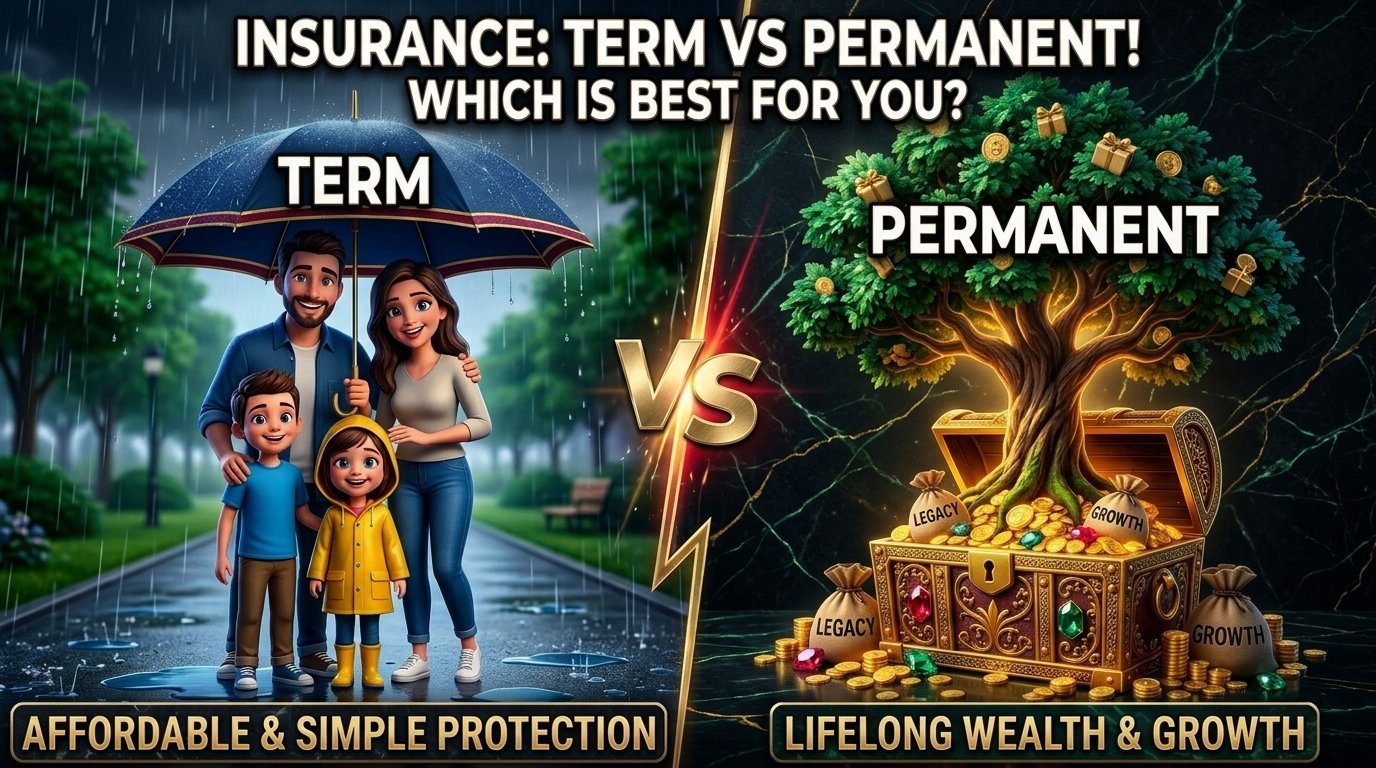
Term vs permanent life insurance: a family under an umbrella for affordable, simple protection, and a tree growing from a treasure chest for lifelong wealth and growth

Term

  • Big death benefit, small premium
  • Covers a set window: 10, 20, 30 years
  • No cash value; premiums buy protection only
  • Coverage ends, or gets expensive, when the term does
  • Often convertible to permanent while the term runs
Get a Term Quote

Permanent

  • Pays no matter when you die
  • Higher premium, generally fixed for life
  • Builds cash value you can generally use while living
  • One dollar, two jobs: protection and a working asset
Book a Needs Analysis
Watch

The complete breakdown, in one video

Everything on this page, walked through on camera: what term does well, what permanent does that term can't, and how to think about the mix.

Where to start

Dig into the pieces

Not sure how much coverage, or which kind?

The needs analysis is free. We'll look at who depends on your income, how many years the biggest obligations run, and what mix of term and permanent your cash flow can actually support. It's not a gimmick or sales ploy. We're here to help!

Book My Free Needs Analysis